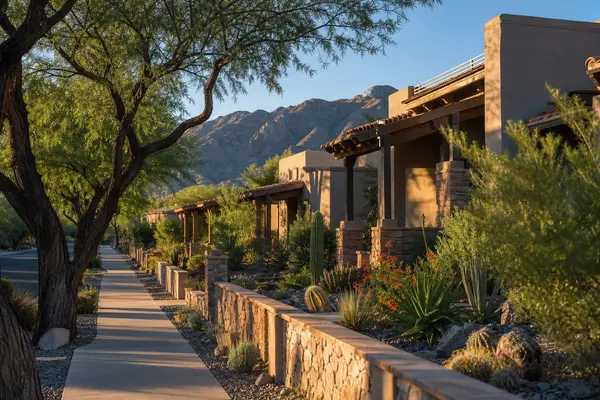
University of Arizona's Impact on Tucson Housing
University of Arizona's Impact on Tucson Housing
How does the University of Arizona affect Tucson's housing market?
The University of Arizona is one of the most powerful economic forces in Tucson, generating more than $8 billion in annual economic impact on the state and supporting tens of thousands of jobs in Pima County. That steady institutional presence creates year-round demand for both rental and owner-occupied housing, shapes neighborhood character in several central Tucson zip codes, and produces seasonal market patterns that buyers, sellers, and investors need to understand before making a move.
Why UA Makes Tucson's Housing Market Different
With roughly 50,000 students enrolled at UA for Fall 2024 (the most recent detailed figure available as of publication), the university functions less like a campus and more like a small city embedded inside Tucson.
Here's the core dynamic: UA's on-campus housing serves primarily first-year students and select upper-division groups. The majority of UA's student population lives off campus, which pushes demand into surrounding neighborhoods, and that demand doesn't disappear when the economy softens or interest rates climb. It shows up every August, every year, like clockwork.
That demand isn't just students. Faculty, staff, researchers, healthcare workers at Banner-University Medical Center, and the businesses that serve the campus community all contribute to local household formation and demand for owner-occupied homes. A massive student renter base plus a large professional workforce tied to the institution gives Tucson a housing demand floor that most mid-size cities don't have.
What the numbers show on home values
Tucson home values have risen significantly from the late 2010s through the mid-2020s. According to Zillow's Tucson Home Value Index, the typical home value in Tucson reached the mid-$300,000s as of mid-2026, a substantial increase compared to pre-pandemic levels. UA-adjacent neighborhoods have been part of that appreciation story, though values vary considerably by specific block and property type.
For broader context on how interest rates and supply constraints are shaping what buyers can afford right now, take a look at how interest rates are shaping the Tucson real estate market.
| Neighborhood / Area | Primary Housing Type | Buyer / Renter Profile | Key Consideration |
|---|---|---|---|
| West University / North University | Historic homes, small multifamily, purpose-built student housing | Student renters, small investors | High turnover, historic overlay regulations, academic-year leasing cycles |
| Sam Hughes | Historic single-family homes | Faculty, staff, families, some students | Design guidelines, active neighborhood association, premium pricing |
| Rincon Heights / Jefferson Park / Feldman's | Single-family, infill multifamily | Student renters, small investors, long-term residents | Parking constraints, occupancy limit enforcement, infill pressure |
| Central Tucson (broader UA corridor) | Apartments, condos, mixed multifamily | Students, young professionals, faculty/staff | New multifamily construction activity, higher asking rents vs. outlying areas |
The seasonal rhythm you need to know
One of the things I always walk buyers and investors through is UA's academic calendar and what it means for timing. This isn't a conventional market where demand is spread evenly across the year.
Student-oriented rentals around UA typically lease on academic-year cycles, with peak leasing activity running from late spring through summer (roughly May through August) as students secure housing for the coming fall semester. Move-outs spike in May around graduation, and move-ins surge in August.
For sellers of investment properties near campus, this calendar matters. Many listings are timed to avoid disrupting occupied student leases or to capture investor interest ahead of the academic year. If you're buying a property with existing tenants, review lease terms carefully and negotiate whether you'll assume those tenants or take possession after the academic year ends. This is standard local practice in UA-area transactions, and it's something I walk every client through before we write an offer.
Thinking about a purchase or sale timed to the academic calendar? Book a call or Zoom with me and we'll map out the timing together before you write or accept an offer.
What Buyers and Investors Should Know Before Purchasing Near UA
The UA area attracts a specific mix of buyers: small investors renting by the bedroom, parents purchasing condos for their students, and faculty or staff looking for short commutes. Each group has different priorities, and that mix shapes how competitive offers get and what terms matter most in a negotiation.
Zoning, occupancy, and the mini-dorm question
Tucson has wrestled for years with so-called "mini-dorms," single-family homes converted to high-occupancy student rentals. The City of Tucson's Unified Development Code addresses occupancy limits, off-street parking requirements when adding bedrooms, and noise and nuisance rules that directly affect how student rentals are managed and what you can do with a property after you buy it. On-street parking is competitive in many of these blocks, which is worth factoring in alongside the zoning picture.
Before you purchase in West University, Rincon Heights, or Jefferson Park with plans to maximize rental income, verify the current zoning classification and any applicable overlay zones. Pima County's comprehensive plan identifies UA and central Tucson as a Core Growth Area where infill development and higher-density housing are encouraged, but specific parcels can still carry restrictions that limit what you can build or convert.
I always tell buyers who are eyeing a property for its rental income potential: confirm the zoning before you fall in love with the numbers. Code enforcement is active in these neighborhoods, and a surprise occupancy limit can change your investment thesis entirely.
Property taxes on investor-owned rentals
One detail that catches some buyers off guard: Arizona law treats investor-owned residential rental properties differently than owner-occupied primary residences for assessment purposes. The Arizona Department of Revenue sets the statutory framework for property tax assessment ratios, and the Pima County Assessor handles local valuation and classification. If you're buying a UA-area property as a rental rather than a primary residence, your effective tax rate will reflect that classification, so check with the Assessor's office and your tax advisor before closing.
Worth noting: UA itself is tax-exempt as a public university, which reduces the taxable parcel count immediately adjacent to campus. All surrounding private housing stock, including the single-family homes, condos, and small multifamily buildings that investors and owner-occupants buy, is fully subject to Pima County property taxation.
Livability near campus
Buyers often ask me whether living near UA means dealing with noise, parking, and student foot traffic. The honest answer: it depends on the specific block and property type, and I'll always tell you upfront what I know about a street before we schedule a showing.
On the positive side, UA-adjacent neighborhoods have solid transit access. The Sun Link streetcar connects the area to downtown Tucson, and City of Tucson transportation maintains bus routes and bike lanes that make car-light living realistic near campus. Proximity to 4th Avenue, Main Gate Square, and downtown amenities is a genuine draw for faculty, staff, and non-student residents who value walkability. The Pima Association of Governments tracks regional transportation planning that will continue shaping how these neighborhoods evolve over the next decade.
What Sellers Near UA Should Expect
If you're selling a home in Sam Hughes, West University, or another UA-adjacent neighborhood, your buyer pool looks different than it would in Oro Valley or Sahuarita. Expect a mix of investors looking for rental income, parents buying for a student child, faculty and staff seeking a short commute, and owner-occupants drawn to the neighborhood's character and walkability.
That buyer diversity is an advantage when you price and prepare the property correctly. An investor evaluating rental income potential and a faculty member buying a primary residence are weighing different things, and a well-prepared listing can appeal to both. Pricing right from the start matters here, and the UA area has enough comparable sales data that overpricing will show up fast.
I've helped sellers in central Tucson navigate the specific dynamics of marketing to this buyer mix, and the strategy isn't one-size-fits-all. Your home's condition, lot size, zoning classification, and whether it has existing tenants all factor into how we position it and who we target, and that's the analysis I do before we ever hit the market.
For a broader look at why Tucson continues to attract buyers from outside the region, including the institutional anchors that support long-term demand, see why Tucson is becoming a hotspot for homebuyers.
Real estate agents and brokers active in Tucson are licensed and regulated by the Arizona Department of Real Estate, which is the authoritative source for verifying an agent's licensing status and legal obligations. When you're buying or selling in a specialized market like the UA corridor, working with someone who knows the neighborhood-level details, not just the zip code averages, makes a material difference in your outcome.
Frequently Asked Questions
How does the University of Arizona affect home prices in neighborhoods close to campus?
UA creates a consistent base of demand from students, faculty, staff, and the businesses that serve the university, which supports property values in nearby neighborhoods. Areas adjacent to UA, including West University, Sam Hughes, and Rincon Heights, tend to see stronger rental demand and investor interest compared to some outlying parts of Tucson. Values still vary significantly by block, property condition, and zoning, so a neighborhood-level analysis is more useful than a campus-proximity rule of thumb.
Is buying a rental property near the University of Arizona a good investment?
UA-adjacent rentals benefit from steady, recurring student demand that renews every academic year, which can reduce vacancy risk compared to markets without an institutional anchor. The trade-offs include higher property turnover, city occupancy and parking regulations, and the need to manage leases on an academic-year cycle. Whether it pencils out depends on the specific property, purchase price, current zoning classification, and your management approach. I'd recommend verifying the zoning and running the numbers with a local lender and tax advisor before committing.
Which Tucson neighborhoods are most popular with UA students, faculty, and staff?
Students concentrate most heavily in West University, North University, and Rincon Heights due to walkability to campus. Sam Hughes attracts more faculty, staff, and longer-term residents drawn to its historic character and neighborhood association oversight. Jefferson Park and Feldman's sit in between, with a mix of student renters and owner-occupants. Each neighborhood has its own zoning rules, historic overlay considerations, and neighborhood association activity that affect what you can do with a property.
Does UA's academic calendar create seasonal ups and downs in Tucson's housing market near campus?
Yes, and it's one of the most important things to understand if you're buying or selling near UA. Peak leasing activity for student rentals runs from late spring through summer, with move-outs concentrated around May and move-ins in August ahead of the fall semester. For investors, this means your vacancy exposure is highest in summer if a tenant doesn't renew. For sellers, timing a listing around existing lease expirations can affect both your buyer pool and your net proceeds.
What should I watch out for when buying a home in a student-heavy area near UA?
The main practical issues are parking availability, noise patterns, and city code enforcement on occupancy limits and property maintenance. The City of Tucson's Unified Development Code sets occupancy limits and off-street parking requirements that directly affect what you can do with a property, especially if you're considering converting it to a higher-occupancy rental. I always recommend a thorough review of the current zoning classification, any applicable overlay zones, and the property's rental history before closing. I'll tell you what I know about a street and what the city's enforcement record looks like in that neighborhood.
The University of Arizona isn't just a backdrop to Tucson's housing market. It's one of the primary engines driving demand, shaping neighborhoods, and creating the seasonal rhythms that buyers, sellers, and investors need to plan around.
If you're ready to talk through your specific situation, book a call or Zoom with me and we'll look at the numbers together.
About Kelly Miller Kelly Miller is a REALTOR® with Realty Executives Arizona Territory in Tucson who has been helping buyers and sellers since 2011, guiding families through the home buying and selling process with honesty, friendly service, and a network of trusted local professionals.
Realty Executives Arizona Territory · +1(520) 631-1229
Equal Housing Opportunity. Kelly Miller is a licensed REALTOR® with Realty Executives Arizona Territory, regulated by the Arizona Department of Real Estate. This article is general information only and is not legal, tax, or financial advice. Confirm your specific numbers and circumstances with your attorney, tax advisor, lender, or escrow/closing officer.
Categories
- All Blogs (14)
- Buy and sell at the same time (2)
- cash to close Tucson (1)
- closing costs Tucson (1)
- down payment Tucson (1)
- earnest money Arizona (1)
- first time home buyer Tucson (3)
- Lifestyle (3)
- Listings (7)
- Pima County real estate (1)
- Real Estate Market (7)
- sell a home (4)
- Tucson 2026 housing market (4)
- Tucson home buying (3)
- Tucson Market (6)
Recent Posts